Top China Retail Storage Boxes & System Racking Manufacturers

A Comprehensive Engineering Whitepaper & Industrial Procurement Blueprint for Global Logistics Operations

38,000 m²
Modern Manufacturing Facility
$28M
Annual Export Volume
14+ Yrs
Industrial R&D Experience
45+ QC
NDT Welding Specialists

Suzhou CraftRack Heavy Duty Storage Equipment Co., Ltd.

Established in 2014, Suzhou CraftRack Heavy Duty Storage Equipment Co., Ltd. operates a premier 38,000 m² manufacturing plant focusing on structural integrity and system automation.

With over 14 years of design expertise and an active 8-year international export presence, we design, test, and manufacture complex logistical configurations. We specialize in supply chains that demand severe duty components, seismic compliance, and high throughput efficiency. From global third-party logistics (3PL) hubs to high-density retail storage spaces and automated e-commerce fulfillment centers, our storage systems integrate easily with existing automated material handling machinery.

1. Global Enterprise Procurement Trends & Structural Racking Demands

The global intralogistics and retail warehousing environment is undergoing a rapid evolution. Industrial procurement departments in North America, Western Europe, and Southeast Asia no longer view storage shelves and containers as passive hardware. Instead, they are critical, dynamic nodes within a complex automated logistics chain. The rise of multi-channel e-commerce, combined with shifting consumer spending patterns, has created several critical structural demands:

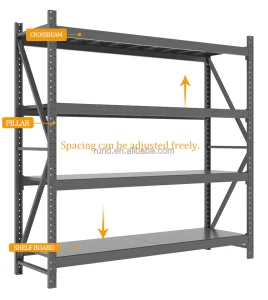
  • Structural Maximization of Vertical Footprints: As land prices soar globally, warehouses must build higher. High-bay industrial racking and boltless adjustable long-span systems allow logistics operators to fully exploit vertical clearance while maintaining optimal structural safety.
  • Integration of Semi-Automated & Intelligent Handling Systems: Modern facilities increasingly employ Automated Guided Vehicles (AGVs), Autonomous Mobile Robots (AMRs), and high-density Automated Storage and Retrieval Systems (ASRS). These technologies require tight manufacturing tolerances, as even millimeter-scale deviations can trigger automation faults.
  • Heavy-Load Environmental Durability: Industrial storage units must survive constant forklift impacts, pallet loading stresses, and changing environmental conditions. Racks must resist corrosion, handle unbalanced loading, and integrate robust drop-protection parameters.

2. Macro-Industry Logistics & Merchandising Solutions

To help supply chain managers, Suzhou CraftRack offers three main modular systems designed for specific industrial operational environments:

A. 3PL & Distribution Hubs

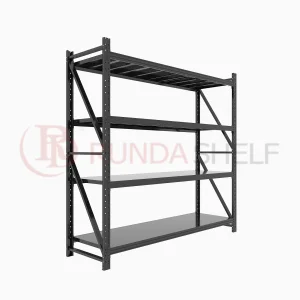
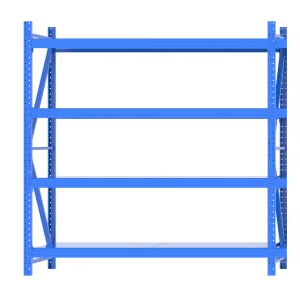
High-capacity longspan steel racking and high-density wire decking optimized for forklift loading, fast stock rotations, and diverse load formats.

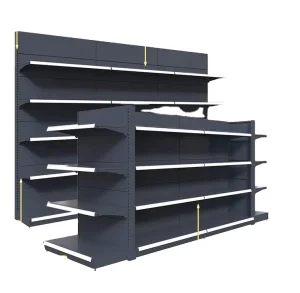
B. Superstore Merchandising

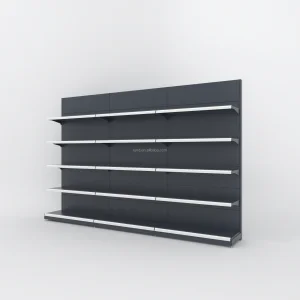
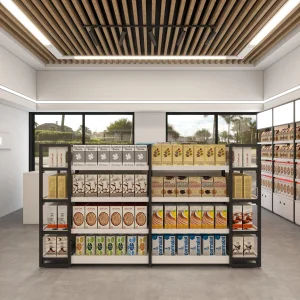
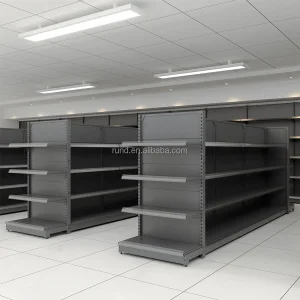
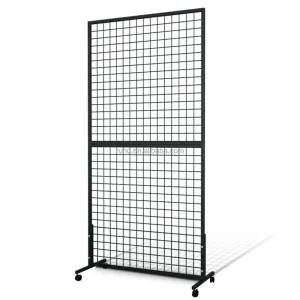
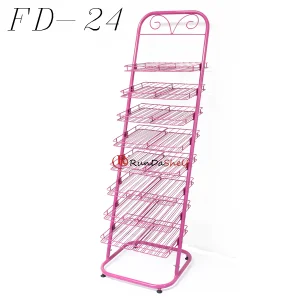
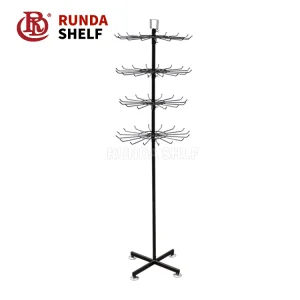
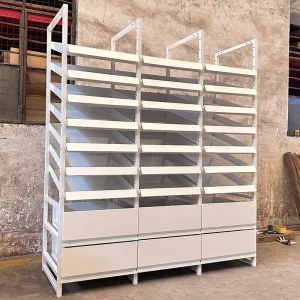
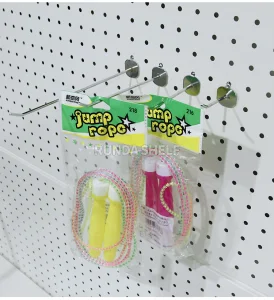
Heavy-duty double-sided display stands, pegboards, and gondolas engineered to present massive weights safely on commercial sales floors.

C. E-Commerce Fulfillment

Multi-tier mezzanine platforms, boltless shelf configurations, and wire cages configured for manual picking paths and quick bin retrieval.

Each solution is custom-engineered using Finite Element Analysis (FEA) to confirm safety limits under real-world loads before fabrication starts. This engineering step prevents systemic rack failure and ensures long-term operational safety.

3. Technological Roadmap & Structural Engineering Integration

Suzhou CraftRack's engineering division focuses on advanced structural analysis and automation. Guided by a team of 32 R&D engineers, our technological roadmap includes the following key engineering steps:

  • Finite Element Structural Analysis (FEA): Using simulation software, we model stress distributions, buckling modes, and dynamic seismic behaviors of metal frameworks under load. This analysis allows us to optimize load-to-weight ratios, ensuring robust strength without wasting excess steel.
  • Seismic Zone Engineering: We customize vertical uprights, baseplates, and row spacers to meet local building codes. By engineering structures with certified seismic resistance ratings, we prevent catastrophic failures during earth movements.
  • Advanced Powder Coating Chemistry: The surface finish must resist scratching, peeling, and corrosion. We apply a multi-stage chemical pre-treatment followed by thermosetting epoxy-polyester powder coating. This treatment ensures long service life, even in unconditioned warehouses or cold storage environments.
  • ASRS Integration Readiness: By maintaining strict tolerances on flatness, perpendicularity, and spacing, our structures integrate seamlessly with high-speed automated crane systems and shuttle racking equipment.

4. Quality Control & Rigorous Non-Destructive Testing (NDT)

Our quality assurance program is backed by 45 dedicated QC specialists. We verify structural integrity at every stage of production using strict testing protocols:

Every batch of raw steel undergoes tensile strength and yield point confirmation tests. Crucially, we employ advanced Non-Destructive Testing (NDT), including Ultrasonic Weld Inspection and liquid penetrant tests, to check internal structural welds for micro-cracks, porosity, or incomplete penetration. These procedures ensure every load-bearing joint performs reliably under constant stresses.

Our Advanced Manufacturing Operations

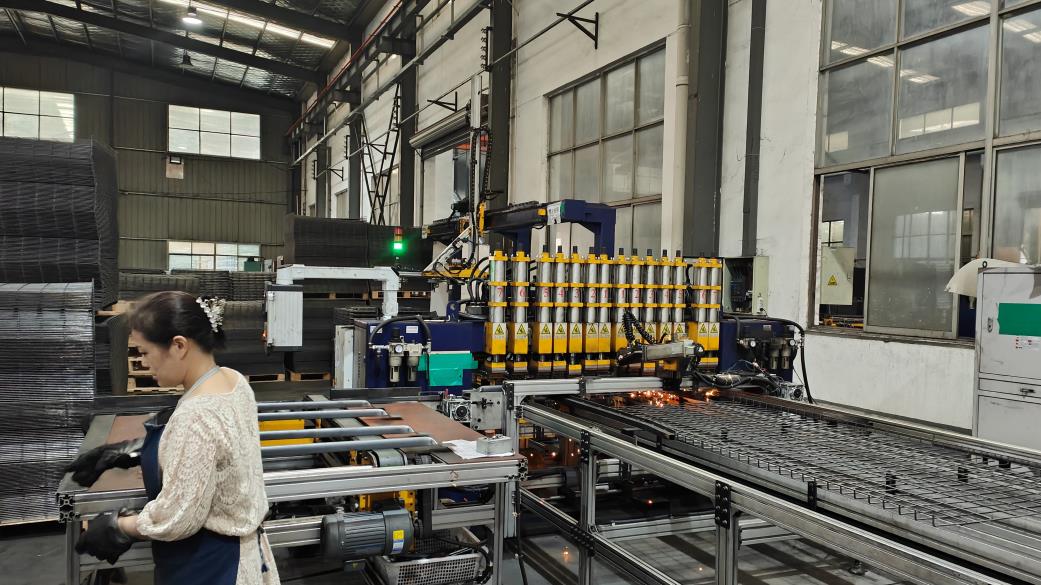
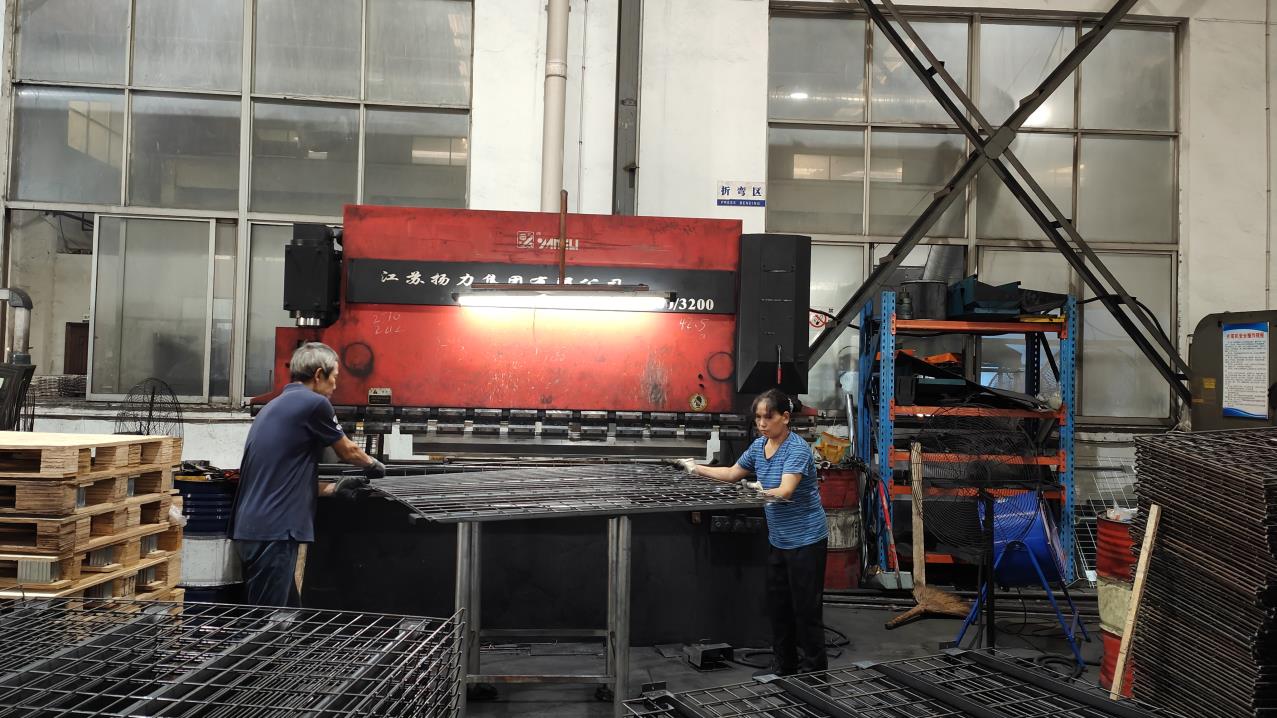
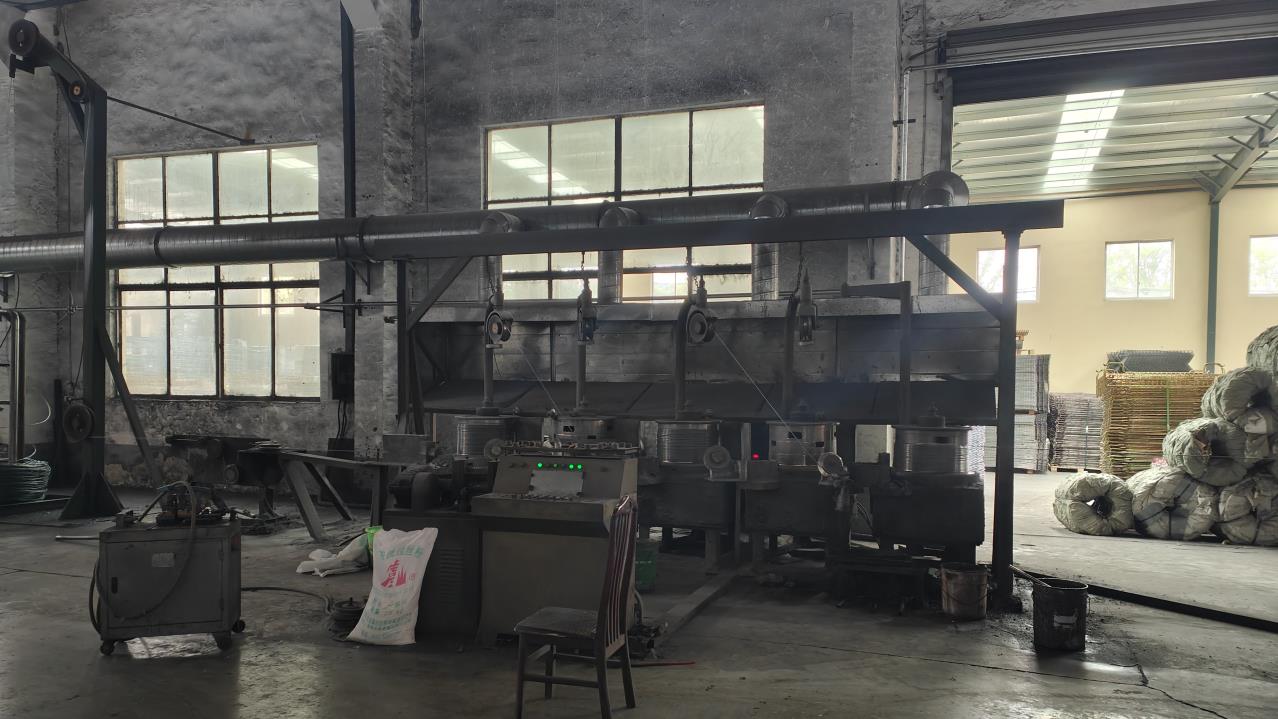
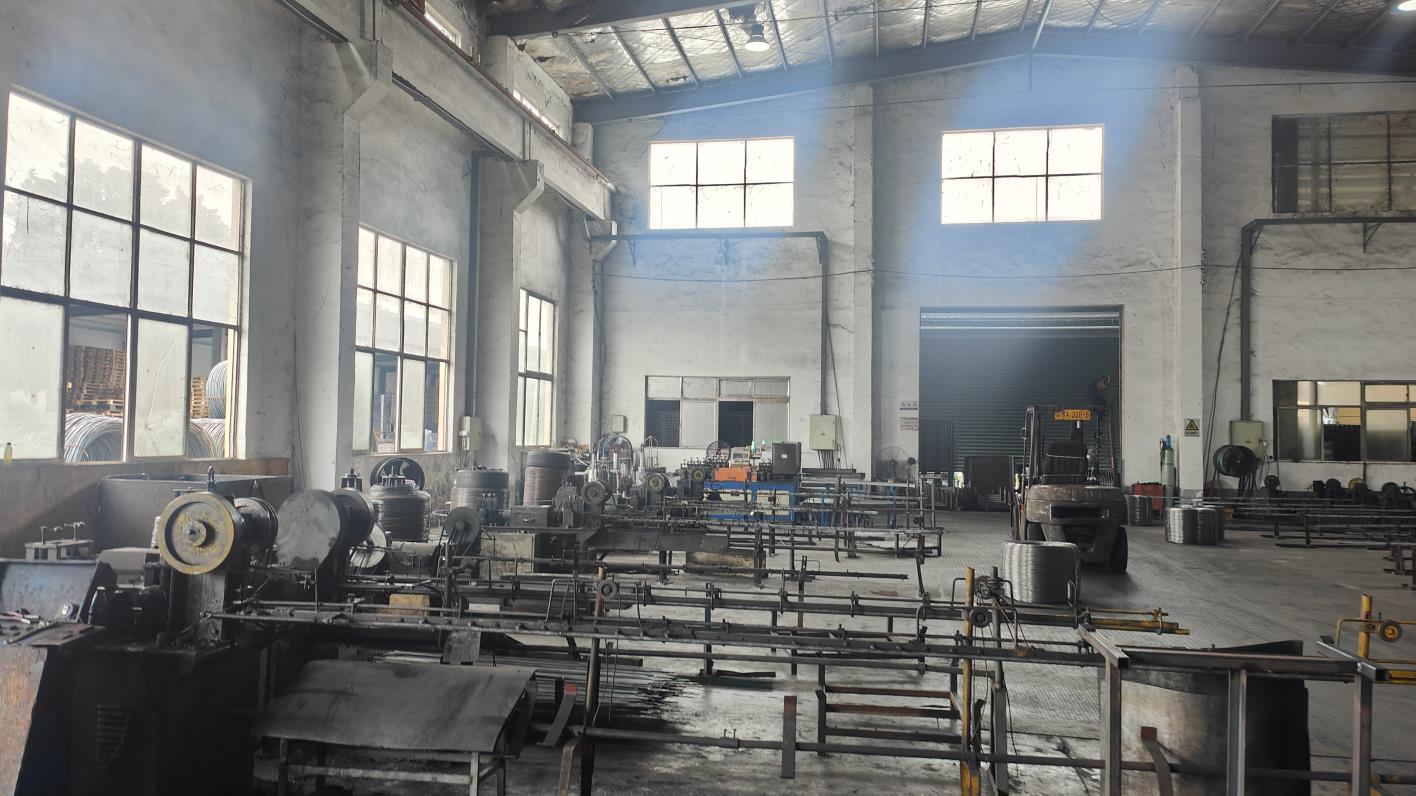
Inside our 38,000 m² Suzhou manufacturing facility: From raw coil processing to robotic welding and automated roll forming.
Pulling metal coil
Coil Pulling
Alignment line
Precision Align
Welding process
Robotic Welding 1
Bending steel
Profile Bending
Punching steel
High-Speed Punching
Welding detail
Manual/Robotic Welding 2
Welding machine
Multi-Point Welder
Bending machine
CNC Bending Station
Punching machine
Progressive Punch Press
Steel wire straightening
Wire Straightener

5. Engineering Deep Dive: The Manufacturing Process Flow

To understand the high structural integrity of Suzhou CraftRack systems, procurement teams can review our step-by-step production flow:

  • 1. Material Pulling & Straightening: Raw steel coils are pulled and fed into high-precision straightening machines. This removes internal material stresses and ensures straight profiles.
  • 2. Alignment & CNC Punching: The steel strips are aligned before passing through computer-controlled punching units. These punch precise connection holes along the frame's length.
  • 3. Roll Forming & Bending: Punch steel profiles are bent into custom geometric shapes (like box-beam sections and upright columns). This profile design maximizes load capacity while reducing unnecessary steel volume.
  • 4. Automated Welding Operations: We use dual welding techniques, combining automated multi-point robotic welding stations for consistency with manual welding by certified technicians for complex configurations.
  • 5. Final Coating: Fabricated components go through a multi-stage cleaning and powder coating process, creating a durable finish that resists impact, abrasion, and moisture.

6. Localized Technical Support & International Compliance Standards

Building high-performance storage solutions requires strict compliance with international structural standards. Suzhou CraftRack supports global deployment through rigorous engineering controls:

We build our warehouse racking systems to comply with leading global standards, including RMI (Rack Manufacturers Institute) standards in North America and EN 15512 codes across Europe. We work closely with structural engineering consultants to provide certified calculations, load rating signs, and seismic documentation for local building permits.

Our global shipping team manages container loading, customs clearance, and logistics. This coordination ensures all parts arrive organized, labeled, and undamaged, allowing for efficient installation at the construction site.

Technical Q&A for Procurement Engineers

Answers to common structural, logistical, and customization questions about our storage systems.

How do you verify the load capacity of custom structural racking layouts?
We use a two-step validation process. First, we perform Finite Element Analysis (FEA) to simulate load distributions and locate potential stress points. Second, we conduct physical load-to-destruction tests on prototype components. These tests are monitored by our 45-specialist QC team to verify that the safety factors meet RMI and EN guidelines.
Can you customize racks for locations in highly active seismic zones?
Yes. Our R&D department calculates dynamic seismic loads based on local building codes. We adjust steel thickness, configure wider baseplates with dual anchor points, and add bracing systems. This ensures the installation maintains structural integrity during seismic events.
What testing procedures do you use for safety-critical welding points?
We use Ultrasonic Weld Inspection and Non-Destructive Testing (NDT) to inspect structural load-bearing welds. This allows us to locate any internal defects, such as porosity or micro-fissures, without damaging the component. It ensures all welded connections meet our high performance standards.
What is the typical production timeline for large OEM/ODM projects?
A typical production cycle takes 30 to 45 days from engineering approval to container loading. This timeline includes raw material selection, CNC punching, roll forming, welding, powder coating, and final quality checks. We work with over 1,200 supply chain partners to keep production running smoothly.
What finish options do you offer for cold storage or chemical exposure environments?
For cold storage or damp conditions, we offer hot-dip galvanized steel coatings or zinc-rich primer basecoats under our standard powder finishes. For environments with chemical exposure, we formulate epoxy-polyester powder coats to resist corrosion and chemical degradation.