What Is Pantry Shelving and Which Type Is Best?

Time:2026-11-19 Author:Sienna
0%

Pantry Shelving is the system of shelves, supports, and storage surfaces used to organize food and kitchen supplies. It can be as simple as a few fixed boards or as flexible as adjustable rails and baskets. The right choice depends on more than appearance. Consider the pantry’s width, ceiling height, wall strength, and the items you store most often. Canned goods need steady support. Tall cereal boxes need clearance. Heavy appliances call for stronger shelves and secure installation.

There is no perfect setup. A deep shelf may hold more, yet hide small jars at the back. Wire shelving allows airflow, but narrow containers can wobble or tip. Solid wood and laminate create a stable surface, while metal systems often offer easier adjustment. Measure the space before buying, including door swings and awkward corners. Leave room to reach everyday items without moving everything else. Small details matter. A label at eye level can save time, but an overly packed shelf can undo that benefit. Think about cleaning, too: crumbs collect in corners, and spills are harder to manage when shelves are crowded. This guide explains what pantry shelving includes and compares common types by durability, cost, flexibility, and ease of use. The best option is the one that fits your space and routines—not simply the one that looks neat in a photo.
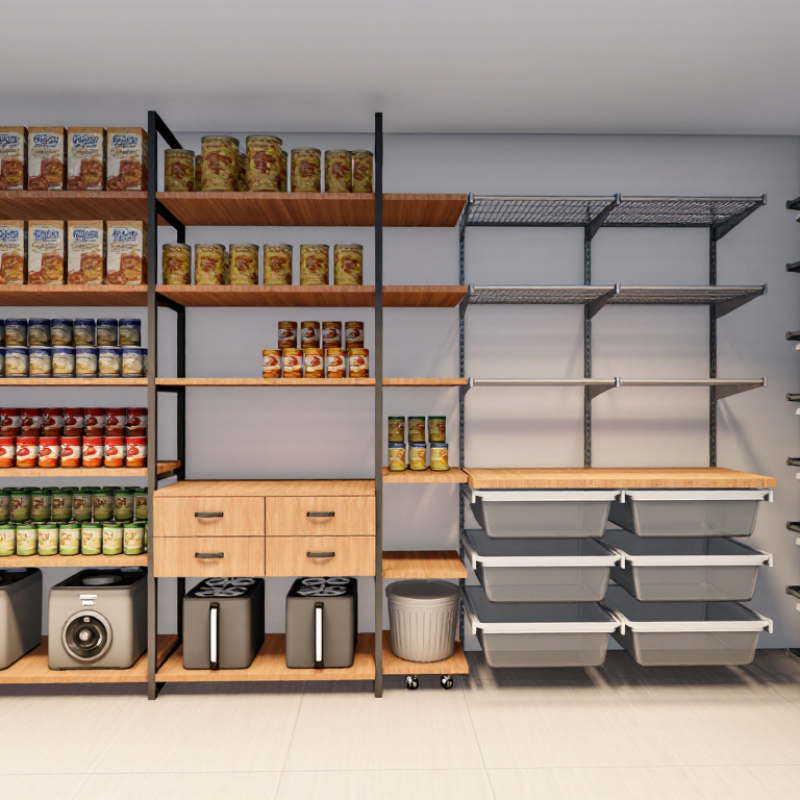
What Is Pantry Shelving and Which Type Is Best?

What Pantry Shelving Is and What It Does

Pantry shelving is the system of boards, racks, or drawers that gives food and kitchen supplies a stable place to sit. It may be built into a cupboard or mounted along a pantry wall. Its main job is simple: keep items visible, reachable, and less likely to become a jumble. A shelf can hold cans, jars, baskets, and small appliances, while the space beneath it may fit taller bottles. That detail matters. Shelves that are too close together waste useful height.

Wire shelving allows air to move around stored items and can be easy to adjust. Solid shelves provide a flat surface for small packets and containers that might tip through gaps. Adjustable shelving is useful when pantry needs change, though the supports must be installed securely for the expected weight. Before choosing a layout, measure the pantry’s width, depth, and height, then check the sizes of common items. A tape measure helps; guessing often does not. It is also worth considering who uses the space and which items need to be reached daily. Even a neat arrangement can become awkward if heavy jars sit overhead. I have found that plans made with an empty pantry can overlook this. Recheck the layout with real groceries in mind.

Key Components and Common Pantry Layouts

Pantry shelving usually combines vertical supports, shelf boards, brackets, and wall fasteners. Some systems also use a back panel or side rails to reduce wobble. Shelf depth matters: deep shelves hold bulky appliances, but small jars can disappear behind one another. Small details matter. Check the wall material and the shelf maker’s load guidance before storing heavy cans or glass jars.

A reach-in pantry often works best with shelves along the back wall and a clear opening at the front. In a walk-in pantry, shelving can run along one or more walls, leaving enough room to turn and reach stored items. A narrow galley layout uses opposing shelves, but the aisle can feel cramped if both sides are too deep. Measure twice. Keep everyday ingredients near eye or waist level, and place occasional-use items higher.

Adjustable shelves help when storage needs change, though they may feel less rigid than fixed shelves if poorly supported. Grouping items by task—baking supplies together, for example—can make retrieval easier. Clear bins help contain small packets, but they also hide labels when stacked. It is tempting to fill every open space; leaving a little room makes restocking less awkward. A layout that looks tidy on paper may still fail once a large cereal box or countertop appliance is added.

What Is Pantry Shelving and Which Type Is Best? — Key Components and Common Pantry Layouts

Pantry shelving is a storage system for food, cookware, and small kitchen supplies. The best choice depends on what you store, how much space you have, and how easily you need to reach items.

Category Type or Component Typical Features Advantages Things to Consider Works Well For
Key Pantry Shelving Components
Component Fixed shelves Stationary shelves attached to walls or a cabinet structure; commonly made from wood, metal, or laminated board. Simple, sturdy, and often cost-effective. Shelf height cannot be changed easily; deep shelves can make items at the back harder to see. Pantries with consistent storage needs and regularly sized containers.
Component Adjustable shelves Shelves rest on movable brackets or shelf pins, allowing the vertical spacing to be changed. Accommodates different item heights, from cans to small appliances. Check the shelf’s load capacity and keep brackets or pins fully seated. Households whose storage needs change over time.
Component Pull-out shelves or baskets Sliding platforms or wire baskets mounted on runners. Bring stored items forward and improve access to lower or deeper storage. Need suitable cabinet width, clearances, and hardware rated for the intended load. Deep cabinets, lower shelves, and items that are frequently used.
Component Drawers and dividers Enclosed or open-front compartments, often organized with removable dividers. Keep small packets and loose items grouped and easy to find. Drawers can use more space than open shelves and need enough room to extend. Snacks, baking supplies, wraps, and other small items.
Component Door-mounted storage Shallow racks or pockets fitted to the inside of a pantry door. Uses otherwise unused door space for lightweight, frequently used items. Allow for clearance when the door closes; avoid overloading the door or storing bulky items. Spices, small packets, and other lightweight supplies.
Component Labels and containers Labels identify contents; clear or consistently sized containers help group dry goods. Make contents easier to identify and help keep groups organized. Containers should be food-safe, clean, dry, and sized to fit the shelf. Bulk dry goods and households that want a consistent storage system.
Common Pantry Layouts
Layout Reach-in pantry A shallow closet or cabinet accessed from the front, often with shelves along the back wall. Fits many homes without requiring a separate walk-in room. Use shelf depth and spacing that keep items visible and reachable; reserve the floor for larger items only if access remains clear. Compact kitchens and homes with limited floor space.
Layout Walk-in pantry A small room or enclosed space that a person can enter, with shelving on one or more walls. Offers substantial storage and allows items to be grouped by use. Keep a clear path through the space and make frequently used items accessible without reaching over other goods. Kitchens with a dedicated storage area and larger household inventories.
Layout Single-wall pantry Shelves or cabinets arranged along one wall, sometimes within a closet or kitchen alcove. Uses a straightforward layout that is easy to organize and survey. Plan shelf widths and heights around the items being stored to avoid wasted space. Narrow rooms, alcoves, and simple pantry conversions.
Layout Galley or two-wall pantry Storage runs along two opposing walls with an aisle between them. Provides storage on both sides while keeping categories separate. Leave enough aisle space to move comfortably and open drawers or pull-outs without obstruction. Long, narrow pantry rooms.
Layout L-shaped pantry Shelving or cabinetry follows two adjoining walls. Makes use of a corner while keeping an open area in the center. Corner areas can be harder to reach; keep everyday items on the most accessible shelves. Small rooms or pantry spaces with two usable walls.
Layout Butler’s pantry A separate service area between the kitchen and another room, often combining counters, cabinets, and shelving. Can provide storage as well as a surface for serving or food preparation. Requires more dedicated space than a basic closet pantry; layout varies by home. Homes that have room for a secondary kitchen work or serving area.

Selection tip: Measure the available space, note the weight and size of stored items, and choose shelving that keeps frequently used goods visible and within easy reach. Shelf dimensions and load limits vary by material and installation.

Main Types of Pantry Shelving

Pantry shelving usually falls into a few practical types: fixed, adjustable, pull-out, wire, and solid-surface systems. Fixed shelves are simple and sturdy, making them useful for heavy jars or countertop appliances. Their spacing cannot change, though, so tall cereal boxes may waste the space above shorter cans.

Adjustable shelves use movable brackets or tracks to change shelf height as storage needs shift. That flexibility matters. A shelf set for mixing bowls can later hold bottles upright, with less unused vertical space. Check the weight rating and bracket stability before loading it; a crowded shelf can sag. Pull-out shelves or baskets bring items at the back within reach, especially in deep cabinets. They need clearances for the sliding hardware, and narrow baskets can limit what fits.

Wire shelving is lightweight and allows air to circulate around dry goods. Small packets and jar lids can wobble or slip through, so shelf liners may help. Solid shelves provide a level surface for small containers and boxes, but crumbs and spills are easier to notice than to ignore. In a real pantry, the best choice often depends on what you store, not how neat a shelf looks empty. Measure the cabinet depth, note the tallest items, and leave a little room for your hand. People often forget that last part.

How Shelving Materials and Designs Differ

Pantry shelving describes the surfaces and supports used to store food, cookware, and small appliances. The material affects strength, cleaning, and moisture resistance. Coated wire shelves let air circulate and make spills easy to spot, but narrow packets can tip between the wires. Plywood or solid wood offers a steadier surface for jars and heavy cans. It can cost more and needs protection from dampness. Laminate-coated boards wipe clean, though chipped edges may swell if water gets inside.

Design matters just as much. Fixed shelves are simple and sturdy, but they can waste space when storage needs change. Adjustable shelves let you move a level to fit cereal boxes or tall oil bottles. Pull-out baskets improve access to items at the back, but need room to slide. Small details matter. A common planning mistake is measuring only the shelf width; door hinges and trim can reduce usable space. Check wall support and the shelf system’s stated load limits before storing heavy goods.

Tips: Measure the tallest items first, then leave a little clearance above them. Keep frequently used ingredients at eye level. Use solid shelves for small containers, and reserve wire shelving for larger, stable items. Think about cleaning, too. Crumbs can hide in corners, and the perfect layout on paper may feel awkward once the pantry is full.

How to Choose the Best Pantry Shelving for Your Needs

Choosing pantry shelving starts with what you store, not how polished the shelves look. Measure the widest cereal box, tallest oil bottle, and deepest appliance before buying anything. Adjustable shelves suit changing groceries; fixed shelves often feel sturdier for heavy jars and small appliances. Wire shelving lets air circulate, but narrow packets can tip through its gaps. Add shelf liners or choose solid shelves if that bothers you.

Consider how you use the pantry each day. Deep shelves hold bulk goods, yet items can disappear behind one another. Shallow shelves improve visibility, while pull-out baskets make low spaces easier to reach. A 2019 National Association of Home Builders report found that 83% of home buyers rated a walk-in pantry essential or desirable. That signals strong interest in pantry space, not a universal need for walk-in storage. A well-planned cabinet can work better in a small kitchen. Measure twice. Leave room for the door swing, and check that shelves can support the weight of cans. I’d still leave one shelf adjustable; household habits change, and even careful plans miss something.

FAQS

What are the main types of pantry shelving?

Common options include fixed, adjustable, pull-out, wire, and solid shelves. Each suits different storage needs.

Are fixed shelves a good choice for heavy items?

They are sturdy and can hold heavy jars or small appliances. Their spacing cannot change, though.

When are adjustable shelves useful?

They suit changing groceries and containers. You can raise a shelf for tall bottles or mixing bowls.

What should I check before loading adjustable shelves?

Check the weight rating and bracket stability. A crowded shelf can sag.

Do pull-out baskets help in deep cabinets?

Yes. They bring items near the back within reach, but need space for sliding hardware.

What are the drawbacks of wire shelving?

Air circulates around dry goods, but small packets and jar lids may slip through. Liners can help.

How can I make pantry items easier to see?

Shallow shelves improve visibility. Deep shelves hold bulk goods, but items may disappear behind one another.

What should I measure before choosing shelves?

Measure your widest cereal box, tallest bottle, cabinet depth, and deepest appliance. Leave room for your hand and the door swing.

Is a walk-in pantry necessary?

No. A well-planned cabinet can work well in a small kitchen. I might still miss something, so leave one shelf adjustable.

Conclusion

Pantry Shelving is the system of shelves and supporting components used to store food, cookware, and household essentials in an organized, accessible way. A pantry may have adjustable shelves, fixed shelves, brackets, rails, or drawers, arranged in layouts such as a reach-in closet, a walk-in room, or a cabinet pantry. The right arrangement makes use of available space and keeps frequently used items easy to reach.

Pantry shelving comes in several forms, including open shelves, pull-out units, corner shelves, and wire or solid-surface designs. Materials such as wood, metal, and plastic differ in appearance, durability, upkeep, and suitability for different loads. To choose the best option, consider the pantry’s dimensions, the items you plan to store, your preferred level of visibility and access, and how much maintenance you are willing to do. A practical system balances capacity, convenience, and a layout that can adapt as storage needs change.

Sienna

Sienna

Sienna is a skilled marketing professional with a deep expertise in our company’s core products and services. With a passion for innovation and detail, she plays a pivotal role in crafting insightful blog posts that not only highlight the unique features of our offerings but also provide valuable......