Choosing Compact Shelving in 2026 requires more than measuring an empty wall. Storage needs are changing quickly. Offices, archives, workshops, and small retailers now demand flexible systems that save floor space without creating access problems.
A reliable choice begins with real measurements. Record ceiling height, aisle width, doorway clearance, and the weight of stored items. A shelf that fits on paper may block a fire route or fail under uneven loads. Check manufacturer load ratings, adjustment intervals, anchoring guidance, and material quality. Powder-coated steel often suits busy rooms, while corrosion-resistant finishes may perform better in humid areas. Independent test reports and clear warranty terms add confidence.
Technology also deserves careful attention. Mobile Compact Shelving can improve capacity, but smooth movement, anti-tip features, and simple controls matter more than impressive screens. Ask whether staff can operate the system safely during a power outage. Consider lighting, ventilation, accessibility, and future expansion before approving a layout. Experienced installers should explain maintenance schedules and document every critical specification.
No option is perfect. A cheaper unit may cost more after repairs, while a premium system may exceed a modest budget. I would question any supplier promising maximum capacity without discussing user behavior. Shelves become crowded, labels disappear, and plans change. The best 2026 solution balances density, safety, durability, and daily convenience. Treat product claims carefully. Compare evidence, inspect samples, and test one working bay before committing to a complete installation.
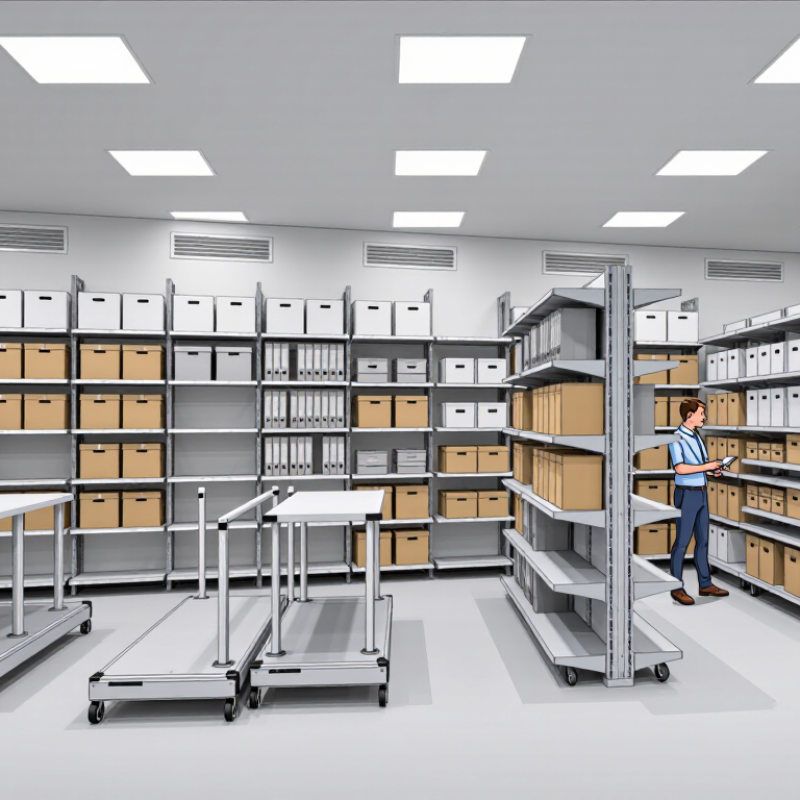
Define Compact Shelving Types and Match Them to 2026 Storage Needs
How to Choose Compact Shelving in 2026?
Compact shelving is not one system. It usually includes mobile shelving, sliding-door units, vertical carousels, and modular bin racks. Each type solves a different storage problem.
Mobile shelving
Mobile shelving suits archives, spare parts, and controlled-access rooms. Rails let several aisles share one access lane.
Vertical carousels
Vertical carousels use height instead of floor space. They work well for small components and frequent picking.
Modular bins
Modular bins offer flexibility when product sizes change. Measure the items first. Guessing creates expensive gaps.
2026 storage planning should connect density with labor, safety, and data visibility. Zebra Technologies’ 2024 Warehousing Study reported that
73% of decision-makers plan to adopt automation by 2029. That trend supports powered mobile systems and vertical units with barcode controls.
However, automation is not always the answer. Low-volume stock may need simple static shelving. A practical audit should record SKU size, retrieval frequency, aisle clearance, floor loading, and future growth. Leave room for mistakes. A perfect layout is unlikely.
The 2024 Occupational Safety and Health guidance also reinforces clear aisles, stable loads, and safe access practices.
Compact does not mean crowded. Choose mobile shelving for maximum density, vertical systems for height-limited floors, and modular bins for changing inventories. Recheck the plan after three months of real use.
Measure Clearances: ADA 2010 Requires 36-Inch Accessible Routes
How to Choose Compact Shelving in 2026?
Compact shelving can increase storage capacity, but movement space must come first. Under the 2010 ADA Standards, an accessible route generally requires at least 36 inches of clear width. Measure the open aisle, not the shelf frame. Handles, rails, and stored boxes can reduce usable clearance. A layout that appears wide on paper may feel restrictive in practice.
Leave enough room for wheelchair users to approach, turn, and operate shelving safely. Some spaces may need a 60-inch turning area, depending on the layout and equipment. Moving shelves also require careful control placement. Controls should remain reachable without forcing users into an unsafe position. Confirm local building requirements, because additional rules may apply to your facility.
Tips: Mark the proposed aisles with tape before installation. Test the route with a tape measure and a loaded cart. Check the narrowest point. Do not rely only on manufacturer drawings. Keep emergency paths clear, and review the final arrangement after shelves are stocked. A small mistake in measurement can become a daily obstacle. This is where many plans need another look.
Verify Shelf Loads Under ANSI/BIFMA X5.9-2019 Storage-Unit Standards
How to Choose Compact Shelving in 2026?
Compact shelving saves floor space, but its load rating deserves careful verification. ANSI/BIFMA X5.9-2019 provides test methods for storage-unit strength, durability, and stability. It does not automatically make every shelf suitable for heavy materials. Ask for written test results, the tested configuration, and the permitted load per shelf. Check whether the rating applies to evenly distributed weight or concentrated objects. A shelf holding several boxes is different from one supporting a metal tool case.
Look closely at the weakest point. Uprights, clips, brackets, fasteners, and the base may carry different loads. Confirm that the stated capacity matches the actual shelf width, depth, and adjustment position. Compact units can become unstable when loaded high or placed on uneven flooring. Anchoring instructions matter. So does clear labeling. A tidy specification sheet can still leave gaps. I would not rely on a general “heavy-duty” claim.
Tips: Measure the heaviest item first. Keep dense items low. Leave clearance for doors and sprinklers. Request the standard’s relevant test references, not only a marketing number. Inspect shelves after installation and again after several months. Small deflections, loose clips, or leaning frames deserve attention. My own review habit is imperfect: I sometimes focus on maximum capacity and overlook daily loading patterns. Real use should guide the final choice.
Protect Inventory with NFPA 13’s 18-Inch Sprinkler-Clearance Rule
How to Choose Compact Shelving in 2026?
Compact shelving can protect floor space, but it must not compromise fire protection. The key question is not how many cartons fit. It is whether stored goods remain below the sprinkler clearance required by NFPA 13. In many storage layouts, the minimum clearance is 18 inches between the storage top and sprinkler deflectors. This space helps water spread across the room instead of striking a solid shelf or crowded carton first.
Measure the actual ceiling height, sprinkler position, shelf height, and tallest stored item. Do not rely on catalog dimensions alone. A movable carriage may add several inches above the shelf frame. Leave breathing room. Avoid placing boxes, signs, or lighting within the clearance zone. I once reviewed a layout that looked efficient on paper, but the loaded bins reduced the gap to about 11 inches. That mistake mattered.
Choose shelving with adjustable levels, visible load ratings, and a locking system that keeps units aligned. Keep aisles wide enough for safe access and emergency response. High-density storage can also change heat patterns, so the existing sprinkler design may need professional review. NFPA requirements can vary by storage height, commodity, sprinkler type, and code edition. Confirm the current requirements with a qualified fire-protection engineer and the local authority having jurisdiction before installation. A small measuring error can become a costly redesign.
How to Choose Compact Shelving in 2026?
Protect Inventory with NFPA 13’s 18-Inch Sprinkler-Clearance Rule
The chart uses common compact-shelving heights and adds the NFPA 13 benchmark of at least 18 inches between the top of stored inventory and sprinkler deflectors. For example, shelving with a 96-inch top storage level requires at least 114 inches of vertical clearance below the sprinkler deflector. Confirm the applicable NFPA 13 edition, storage arrangement, sprinkler design, and local authority requirements before installation.
Compare Total Cost Using Density, Retrieval Time, Installation, and Energy Data
Choosing compact shelving in 2026 should begin with total cost, not the lowest invoice. Measure usable cubic metres, aisle width, and daily retrieval volume. A dense layout may store 35% more files in the same room. Yet extra movement can erase that saving. Record retrieval time for one week, using real staff and peak periods. Include walking distance, search delays, and errors. A ten-second delay repeated 800 times daily becomes a measurable labor cost.
Tips: Request a site-specific density calculation, not a standard capacity claim. Price floor preparation, delivery, assembly, safety checks, and future reconfiguration. Ask for energy estimates when powered movement or lighting is included. Use your local electricity rate and operating hours. Keep a small contingency; installation estimates are often optimistic. I have seen “simple” layouts require extra leveling work. That detail is easy to miss.
Compare options in a five-year spreadsheet. Add purchase price, installation hours, service visits, energy use, and staff time. A manual system may cost less initially but require longer retrievals. A powered system may reduce searching but increase electricity and maintenance costs. Test a sample bay before approving the full layout. Track average retrieval seconds and monthly power readings. Recheck assumptions after three months. The first calculation may be wrong. That is useful evidence, not failure.
How to Choose Compact Shelving in 2026? - Compare Total Cost Using Density, Retrieval Time, Installation, and Energy Data
Indicative 2026 planning comparison for storing the same 1,000 linear feet of records, parts, or inventory. Costs are shown in USD and exclude building rent, taxes, permits, and software.
| Storage System |
Usable Storage Density
(Index) |
Approx. Floor Area Required
(sq. ft.) |
Average Retrieval Time
(seconds) |
Typical Installation Time |
Installed Cost
(USD) |
Annual Energy Use
(kWh) |
Annual Maintenance
(USD) |
Estimated 10-Year Total Cost
(USD) |
Best-Fit Application |
| Static Shelving |
1.00× |
1,000 |
30 |
1–3 days |
$18,000 |
0 |
$300/year |
$46,000 |
Fast access, low-volume storage, and operations with abundant floor space |
| Manual Mobile Shelving |
1.80× |
556 |
42 |
3–7 days |
$42,000 |
0 |
$800/year |
$85,000 |
Space-constrained facilities with moderate retrieval frequency |
| Powered Mobile Shelving |
2.20× |
455 |
18 |
5–10 days |
$78,000 |
1,000 |
$1,500/year |
$109,600 |
High-density storage requiring frequent access and improved operator productivity |
| Vertical Lift Module |
3.00× |
333 |
15 |
2–4 weeks |
$125,000 |
3,000 |
$3,000/year |
$172,300 |
Very high-value, small-item inventory where floor-space savings justify automation |
Conclusion
Choosing Compact Shelving in 2026 requires balancing storage density, accessibility, safety, and long-term operating costs. Start by identifying the right system type—static, mobile, adjustable, or high-density shelving—and match it to the facility’s inventory, workflow, and available floor area. Before installation, measure aisle widths, doorways, turning areas, and emergency routes. Accessible paths should maintain the 36-inch clearance referenced by ADA 2010, while shelf capacities should be verified against product specifications and the performance principles of ANSI/BIFMA X5.9-2019.
Safety planning is equally important. Arrange stored materials so they do not obstruct fire-protection systems, maintaining the 18-inch clearance below sprinklers required by NFPA 13 where applicable. Finally, compare total cost rather than purchase price alone. Consider usable storage density, retrieval time, installation requirements, maintenance, lighting, and energy consumption. The best Compact Shelving solution improves space utilization without reducing safe access, operational efficiency, or flexibility for future storage needs.

 CraftRack