10 Best Shelving Boards for Storage and Display

Time:2026-11-12 Author:Charlotte
0%

Shelving Boards do more than hold objects. They shape how a room feels, how safely it stores weight, and how easily everyday items stay within reach. The right choice depends on span, load, moisture, finish, and budget—not appearance alone. A neat shelf can still sag. That detail is easy to miss.

The USDA Forest Products Laboratory’s Wood Handbook reports that, at 70°F, wood’s equilibrium moisture content is about 6% at 30% relative humidity and 13% at 70%. Robert J. Ross, a wood-products researcher and editor of the handbook, highlights a key principle: “Wood is a hygroscopic material.” In practical terms, solid wood can respond to damp rooms and seasonal changes. Particleboard, plywood, and metal bring different trade-offs in cost, stiffness, and finish. None is perfect for every room.

This guide compares 10 Shelving Boards for storage and display, from economical utility panels to polished options for visible spaces. Look closely at thickness, support spacing, edge quality, and the manufacturer’s load guidance. A long shelf holding books needs different support from a short ledge displaying ceramics. Measure twice. The awkward truth is that attractive boards may need extra brackets, while sturdy ones may feel too industrial for a living room. Use the comparisons to match the material to the job, then verify dimensions and load limits before buying.
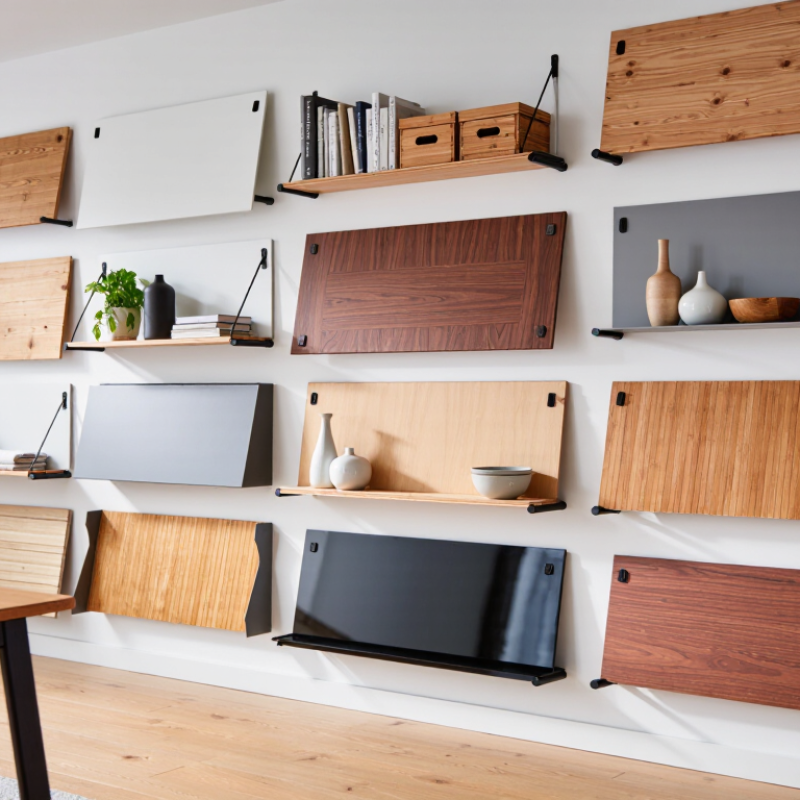
10 Best Shelving Boards for Storage and Display

What Shelving Boards Are and How They Support Storage and Display

Ashelving board is the flat surface that carries stored objects or presents them for viewing. It may be solid wood, plywood, or a particleboard panel. Its job sounds simple. Yet board thickness, shelf span, bracket spacing, and edge support all affect how much weight it can hold without sagging. A short shelf holding folded towels faces different demands from a long shelf displaying heavy ceramic bowls. Surface finish matters too: smooth edges protect books and hands, while a sealed surface is easier to wipe clean. Small details matter.

Moisture can change a board’s shape over time. The USDA Forest Products Laboratory’s Wood Handbook places wood’s fiber saturation point near 30% moisture content; below that point, changes in moisture can cause dimensional movement. A board near a sunny window or damp exterior wall may therefore cup or bow. Check the shelf’s span and support before loading it, and inspect it after installation.

Not always obvious.

The U.S. EPA’s 2018 Advancing Sustainable Materials Management report estimated 18.1 million tons of wood in municipal solid waste. Choosing sturdy, maintainable boards can help keep shelving useful longer, though no material is immune to poor support or neglect.

Key Factors for Evaluating Shelving Boards

A good shelving board starts with the load it must carry. Books, jars, and folded towels place different demands on a shelf. Check the board’s stated weight capacity and the support spacing it assumes. A long, unsupported span may sag, even when the material feels sturdy in your hands. Measure the clear distance between brackets, not just the wall width. Small detail. It matters.

Material and thickness affect strength, weight, and appearance. Solid wood can be trimmed or refinished, but its grain and moisture content may vary. Plywood often offers stable layers, while particleboard can be heavier and less forgiving around screws. Compare thickness and edge quality, especially where a board will remain visible. For kitchens, bathrooms, or damp storage areas, consider moisture exposure and protective finishes. No board is completely immune to poor ventilation.

Installation deserves equal attention. Brackets, wall anchors, and fasteners must suit both the shelf load and the wall structure. A level board can still fail if its supports are poorly secured. Inspect edges for chips, and check for bowing before mounting. The awkward part is balancing looks with capacity; a slim profile may be attractive but unsuitable for heavy storage. Recheck the measurements. Even careful estimates can be off.

10 Best Shelving Boards for Storage and Display - Key Factors for Evaluating Shelving Boards

Compare common shelving-board materials by typical thickness, suitable uses, moisture behavior, and practical evaluation points. “Best” depends on the load, span, environment, finish, and support system.

Rank Board Type Typical Thickness Best Suited For Strength and Span Considerations Moisture Behavior Key Evaluation Factor
1 Plywood 12–25 mm (about 1/2–1 in) General-purpose storage, garages, utility rooms, and shelves that need screw-holding strength Cross-laminated veneers provide good stiffness and strength for many shelf applications. Performance depends on grade, thickness, support spacing, and load distribution. Standard plywood can swell or delaminate if repeatedly exposed to water; exterior-rated grades and sealed edges perform better in damp conditions. Check the plywood grade, number and quality of veneer layers, surface condition, and whether the edges will be sealed.
2 Solid Hardwood 19–32 mm (about 3/4–1 1/4 in) Visible shelves in living rooms, offices, libraries, and other display areas Often strong and durable, though stiffness varies by wood species, board width, grain, and moisture content. Long shelves may need a front edge strip or intermediate support. Can expand, contract, or warp as humidity changes; a suitable finish helps limit moisture exchange but does not eliminate movement. Look for straight grain, stable boards, sound joints, and a finish suited to the room’s humidity and expected wear.
3 Melamine-Faced Particleboard 16–25 mm (about 5/8–1 in) Closets, cabinets, pantry shelving, and clean indoor storage The panel is convenient and has a smooth, wipeable face, but it can sag on long unsupported spans. Secure support and suitable shelf thickness are important. Unsealed edges and damaged surfaces can absorb water and swell; it is generally intended for dry indoor use. Inspect edge banding and corners, and confirm that the support spacing suits the expected load.
4 Medium-Density Fiberboard (MDF) 16–25 mm (about 5/8–1 in) Painted shelves, craft rooms, and display areas where a smooth surface is important Its uniform surface is easy to paint, but MDF is relatively heavy and can sag over wide spans. It generally holds screws less reliably near edges than plywood. Standard MDF is vulnerable to swelling when wet; moisture-resistant grades are available but still require appropriate protection. Consider shelf span, edge support, weight, and whether all exposed faces and edges will be finished.
5 Solid Pine 18–28 mm (about 3/4–1 1/8 in) Budget-friendly shelving, painted projects, and light-to-medium household storage Easy to cut and work with, but softer than many hardwoods and more prone to dents. Knots and board quality affect consistency; long spans can deflect. Like other solid wood, it responds to humidity changes and benefits from a suitable protective finish. Check for knots, splits, bowing, and the actual shelf span; add supports for heavier or longer shelves.
6 Laminated Bamboo Panel 18–25 mm (about 3/4–1 in) Modern interior shelving, desks, and display shelves with a natural-looking finish Engineered laminated panels are relatively stable and can be stiff, but properties vary with construction, thickness, and panel quality. Not waterproof; prolonged moisture can affect the panel and its adhesive layers. Seal exposed surfaces and edges where appropriate. Review panel construction, finish quality, edge condition, and the manufacturer’s intended indoor use.
7 Oriented Strand Board (OSB) 15–25 mm (about 5/8–1 in) Workshop, garage, and other practical utility shelving where appearance is secondary Structural OSB can be strong when properly supported, but stiffness and suitability depend on panel grade, thickness, orientation, and span. Some grades are designed for more demanding exposure than others, but cut edges can still be susceptible to moisture-related swelling. Choose an appropriate panel grade, orient and support it correctly, and protect exposed edges in humid areas.
8 High-Pressure-Laminate (HPL) Faced Panel 16–25 mm (about 5/8–1 in), depending on the core Frequently used shelves, retail-style displays, and surfaces that need to be easy to clean The durable laminate face resists everyday surface wear, while the core determines much of the shelf’s stiffness and load behavior. The face resists routine spills, but water can enter through unsealed edges, joints, or damaged areas and affect the core. Evaluate both the laminate surface and the core material; check edge protection and support spacing.
9 Tempered Glass Typically 6–12 mm (about 1/4–1/2 in), selected for the shelf design Decorative displays, bathrooms, and spaces where a transparent, light-looking shelf is desired Glass is rigid but brittle and requires suitable supports. Safe load limits depend on thickness, shelf dimensions, support positions, and edge condition. Unaffected by ordinary indoor humidity and easy to wipe clean, but impact or damaged edges can cause failure. Use safety-rated tempered glass, appropriate shelf supports, and a load rating specified for the exact shelf dimensions.
10 Compact Laminate Typically 6–13 mm (about 1/4–1/2 in), depending on the application Bathrooms, kitchens, and other settings where a thin, dense, moisture-resistant shelf is useful Dense and durable for its thickness, but a thin panel may need closer support than a thicker wood-based shelf. Follow the panel’s application guidance. Generally more moisture-resistant than common wood-based panels; cut edges and installation details still matter. Confirm panel thickness, support requirements, fixing method, and suitability for the intended wet-area exposure.

Important: Shelf load capacity cannot be determined from material and thickness alone. It also depends on shelf length and depth, support spacing, mounting hardware, wall or cabinet construction, and how the load is distributed. Check product specifications and use additional supports when needed.

10 Shelving Board Options and Their Distinctive Features

Shelving boards differ in strength, finish, weight, and care needs. Solid hardwood handles everyday storage well and shows natural grain, but it can be heavy and costly. Softwood is lighter and easier to cut, though dents may appear around busy shelves. Plywood uses layered veneers for dependable strength across wider spans. Check its edge finish; exposed layers can look unfinished.

MDF has a smooth face that suits painted displays, but moisture can swell it. Particleboard is often economical and works best with modest loads and close support. Melamine-faced board wipes clean easily, making it practical for closets and pantry items. Veneer-faced board offers a real-wood surface with a more consistent core. Looks are not the whole story. Thin veneer can scratch, so placement matters.

Tempered glass keeps a room visually open and suits carefully arranged objects, though fingerprints show quickly. Steel shelving boards tolerate heavier use and are easy to wipe down, but may feel stark in living spaces. Reclaimed wood brings varied grain, knots, and small imperfections; inspect it for soundness before installation. I would compare board thickness, bracket spacing, and the maker’s load guidance rather than judge by appearance alone. A beautiful shelf can still sag. Check the wall and intended load, too.

How to Match a Shelving Board to Your Space and Needs

A shelving board should fit the room before it fits the decor. Measure the wall, the shelf depth, and the objects you plan to store. A row of cookbooks needs more depth than a display of small framed photos. Measure twice. Leave enough room for doors, drawers, and people passing by; a shelf that narrows a hallway can become annoying fast.

Match the board material to its surroundings. Solid wood can suit a living room, while sealed plywood or moisture-resistant panels are often more practical near a laundry area. In damp rooms, check the product’s care guidance rather than assuming a finish makes it waterproof. Looks matter, too. A pale board can brighten a shadowed corner, but it may show scuffs more clearly.

Think about weight and support before loading the shelf. Check the stated load limit and follow the installation instructions, especially for long spans or heavy items. Wall type matters: plasterboard, masonry, and timber walls require different fixings. Place dense objects near brackets, and test the shelf gently before adding more. A board may look sturdy, yet still bow over time. Not always obvious. Recheck it after a few weeks; real rooms have a way of changing the plan.

Installation, Care, and Safe Load Use for Shelving Boards

10 Best Shelving Boards for Storage and Display

A dependable shelf starts with the right board and well-matched supports. Check the board’s thickness, span, and stated load rating before buying. Longer spans can sag, especially under books or heavy containers. Measure the wall carefully, then check for pipes and wiring before drilling. Walls are not always level; a small adjustment may be needed.

Tips: Use a level, suitable fixings, and supports attached to solid framing where possible. If framing is unavailable, choose anchors rated for your wall type. Place heavier items near the supports, not at the center edge. Keep a little clearance around objects you use often.

Care helps shelving boards stay useful. Wipe spills promptly with a soft, slightly damp cloth, then dry the surface. Avoid soaking wood-based boards, since moisture can cause swelling. Recheck screws and brackets after installation and occasionally during use. Do not assume a shelf can carry the same weight across every wall or support setup. Follow the board and hardware instructions, distribute weight evenly, and reduce the load if you notice bending, loose fittings, or cracking. A neat display is not worth a risky shelf.

10 Best Shelving Boards for Storage and Display

Typical material density can help compare board weight, but it does not determine safe shelf load.

How to use this chart: Values are representative reference figures in kilograms per cubic metre; actual density varies by product, grade, and moisture content. Glass is much denser than wood-based boards, so it can be heavy even before items are placed on it. Always follow the board and bracket manufacturers’ load ratings, account for shelf span and support spacing, distribute weight evenly, and secure shelving as directed. Keep boards dry and clean spills promptly.

FAQS

What does a shelving board do?

It provides a flat surface for storing or displaying items. Board material, thickness, and support affect its strength.

What should I check before loading a shelf?

Check the board’s stated capacity and the spacing between its supports. Measure the clear span between brackets, not just the wall width. Small detail.

Which board materials work well for shelving?

Solid wood, plywood, particleboard, MDF, glass, and steel each suit different needs. Plywood often handles wider spans well, while MDF offers a smooth face for painting.

Is particleboard suitable for heavy objects?

It is generally better for modest loads with close support. Its screw-holding strength and exposed edges deserve attention.

How can moisture affect a shelving board?

Damp air or a nearby sunny window can contribute to bowing or cupping over time. A protective finish helps, but ventilation still matters.

What should I consider for a kitchen or bathroom shelf?

Look for a wipeable surface and consider how often the area gets damp. Melamine-faced boards are easy to clean, while some boards may swell when exposed to moisture.

How do I know if the shelf supports are secure?

Choose brackets, anchors, and fasteners suited to the wall and expected load. A level shelf can still fail if its supports are poorly secured. Not always obvious.

What signs should I inspect before installation?

Look for chipped edges, bowing, or weak-looking areas. Check the board and wall before mounting; I’d recheck my measurements, too.

Is a slim shelf always a good choice?

A slim profile can look neat, but it may not suit heavy storage. Compare thickness, support spacing, and load guidance before choosing.

What makes reclaimed wood different?

Its grain, knots, and small imperfections give each board a distinct look. Inspect it for soundness first. Appearance alone is not enough.

Conclusion

Shelving Boards provide a practical foundation for organizing everyday items while also creating attractive displays. Choosing the right board involves weighing factors such as material, strength, thickness, finish, size, durability, and ease of maintenance. Different options suit different purposes: some are designed for lightweight decorative objects, while others offer greater support for books, cookware, or storage containers. Considering the room’s style and conditions, along with the weight and dimensions of the items to be stored, can help narrow the choices.

To match a board to your space, measure the available area, think about how it will be used, and select a finish and material that fit the surroundings. Proper installation is just as important as selecting the right board: use suitable supports, attach them securely, and follow the recommended load limits. Regularly check for signs of wear, clean the surface with appropriate care, and distribute stored items evenly. These steps help keep shelving functional, safe, and visually appealing over time.

Charlotte

Charlotte

Charlotte is a seasoned marketing professional with a deep understanding of the company's portfolio and a passion for elevating its presence in the market. With a keen eye for detail and a commitment to excellence, she ensures that our professional blog is regularly updated with insightful articles......